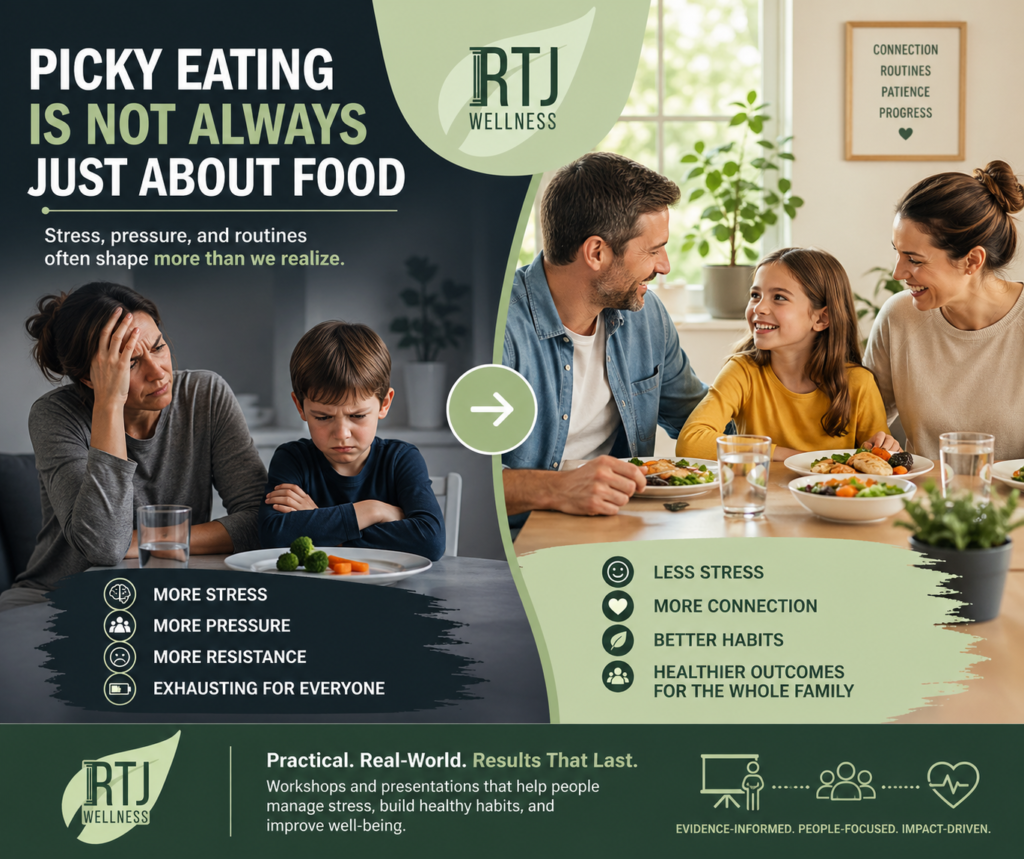
Most people think picky eating is simply about food.
What if it is often about something bigger?
Stress.
Pressure.
Routines.
Emotions.
And how quickly everyday struggles can shape long-term wellness patterns.
That was one of the biggest takeaways from a recent RTJ Wellness podcast conversation with Registered Dietitian Diane Britton.
What stood out was not just the discussion around food choices or mealtime habits. It was the reminder that for many families, picky eating can become a powerful example of something we see everywhere in wellness:
When pressure increases, resistance often increases too.
And that lesson extends far beyond the dinner table.
Mealtime Is Rarely Just About Food
For many parents, mealtime can quietly become one of the most emotionally draining parts of the day.
You want your child to eat well.
You care.
You are trying.
But over time, concern can become pressure.
“Just take one bite.”
“You used to like this.”
“Why are you making this so difficult?”
And suddenly, what started as nutrition becomes frustration.
Parents worry.
Children resist.
Stress rises.
Meals become emotionally charged.
Diane Britton highlighted something incredibly important: this pattern is common.
For many families, picky eating is not simply defiance or stubbornness. It can be shaped by developmental stages, sensory sensitivity, anxiety, family dynamics, and the emotional tone surrounding food itself.
In other words:
The more pressure people feel, the harder positive behavior change can become.
After 30 Years in Education, I Saw This Everywhere
During my three decades as a teacher and coach, I saw a remarkably similar pattern play out again and again.
Not just around food.
Around academics.
Athletics.
Behavior.
Mental health.
Even motivation.
Students often did not struggle because they lacked ability.
They struggled because stress, overwhelm, and pressure pushed their nervous systems into frustration, shutdown, or resistance.
Sometimes the harder adults pushed, the more stuck young people became.
That does not mean expectations do not matter.
It means how we respond under stress matters more than many people realize.
This is one of the most overlooked realities in parenting, education, and workplace wellness today.
The Stress-Resistance Cycle
Whether it is a child refusing vegetables, an employee resisting change, or an overwhelmed adult struggling to build healthier habits, the cycle is often similar:
Pressure increases → Stress rises → Resistance grows → Frustration builds → Outcomes worsen
This is not weakness.
It is often human biology.
When people feel threatened, pressured, or emotionally overloaded, the brain is more likely to shift into protective patterns rather than growth-oriented ones.
This can affect:
- Parenting
- Nutrition
- Classroom learning
- Workplace performance
- Emotional regulation
- Habit formation
At RTJ Wellness, we often remind people:
Stress is not always the enemy. But unmanaged stress can quietly sabotage even our best intentions.
Why Good Intentions Often Backfire
Most parents are not trying to create mealtime tension.
Most leaders are not trying to overwhelm employees.
Most people are not trying to create unhealthy habits.
Usually, they are trying to help.
But when stress rises without awareness, people often default to:
- More pushing
- More pressure
- More control
- More urgency
And ironically, those responses can create the exact opposite of what we want.
This is why practical stress management is not just about “calming down.”
It is about recognizing patterns before they become problems.
A Practical RTJ Wellness Approach: ABC123
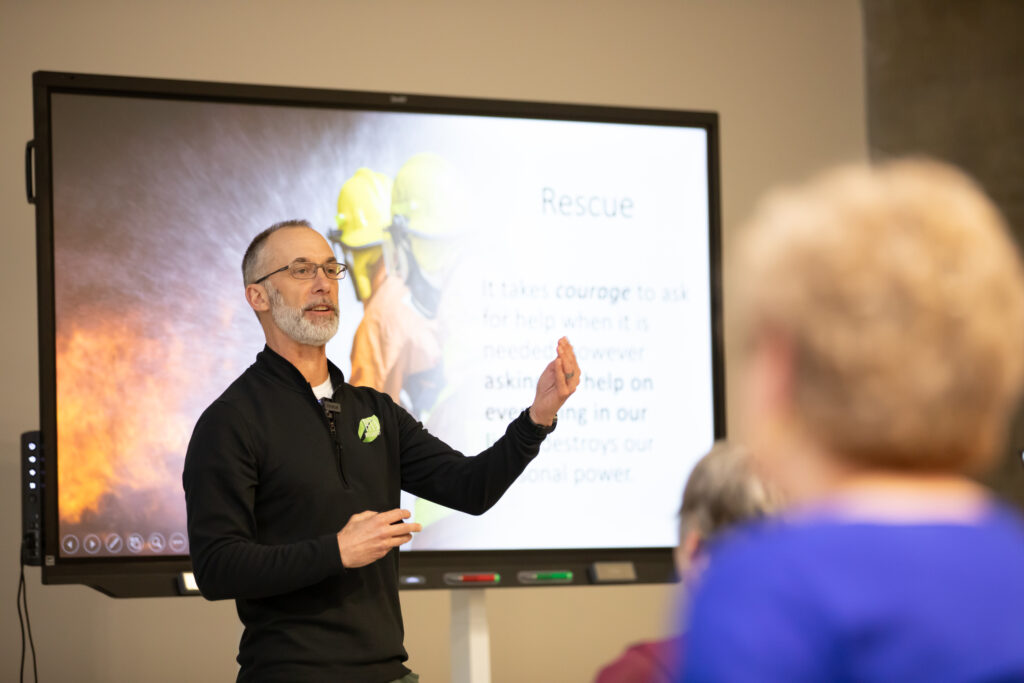
One of the tools we teach through RTJ Wellness is our ABC123 Toxic Stress Buster.
In simple terms:
A – Acknowledge what is really happening
Is this about food… or frustration?
Is this about behavior… or overwhelm?
B – Breathe and regulate
Before reacting, reduce emotional intensity.
C – Choose courageously
Respond in a way that supports long-term wellness, not just short-term control.
This does not mean lowering standards.
It means shifting from reactive pressure to productive strategy.
Whether you are parenting, teaching, leading, or trying to improve your own habits, this pause can be powerful.
The Bigger Lesson: Wellness Is Rarely About One Behavior
Picky eating may look like a food issue.
But often, it can reveal:
- Family stress
- Emotional overload
- Inconsistent routines
- Communication struggles
- Fear or sensory challenges
The same is true in workplaces.
Burnout is rarely just about workload.
It may also involve:
- Lack of autonomy
- Chronic stress
- Poor recovery
- Emotional exhaustion
- Unsustainable habits
This is why lasting wellness solutions often require us to look deeper than the visible behavior.
Better Outcomes Often Start With Less Pressure and Better Tools
This does not mean avoiding responsibility.
It means creating conditions where healthier choices are more likely.
For families, that may mean:
- Reducing mealtime pressure
- Building calmer routines
- Modeling healthy behavior
- Focusing on progress over perfection
For organizations, it may mean:
- Improving stress literacy
- Supporting resilience
- Teaching practical coping strategies
- Creating healthier workplace cultures
For individuals, it may mean:
- Understanding your triggers
- Managing toxic stress
- Building sustainable habits
Final Thought
Picky eating is not always just about food.
And many of life’s struggles are not always just about the visible problem.
Sometimes the real issue is pressure.
Sometimes it is overwhelm.
Sometimes it is the hidden stress patterns shaping our choices.
Diane Britton’s insights were an important reminder that wellness often improves not simply by pushing harder, but by understanding better.
Because whether at the dinner table, in the classroom, at work, or in everyday life:
Less pressure. More awareness. Better tools.
That is often where meaningful change begins.
Looking for Practical, Real-World Wellness Strategies?
RTJ Wellness provides evidence-informed workshops and presentations designed to help schools, workplaces, parent groups, and community organizations better understand stress, build healthier habits, and create meaningful behavior change that lasts.
If your organization is looking for practical wellness strategies that go beyond theory, RTJ Wellness is here to help.