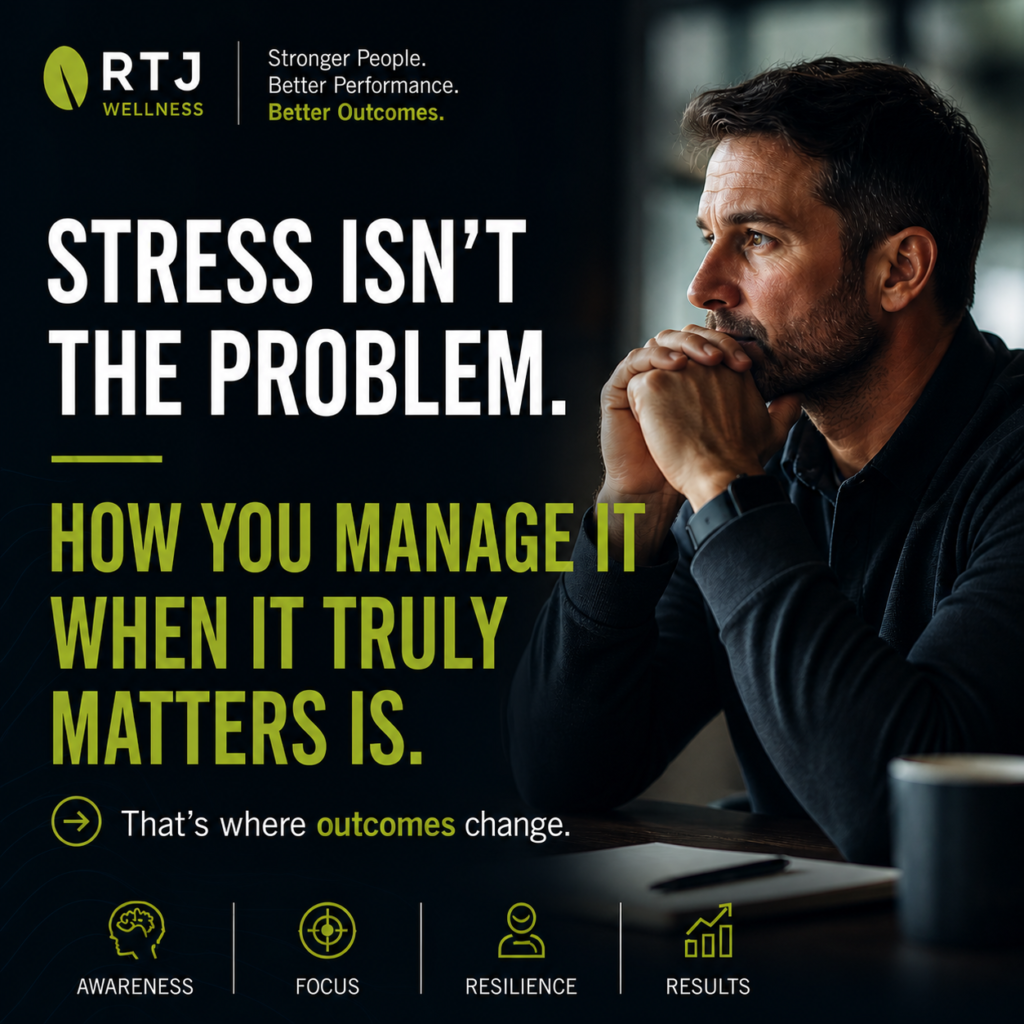
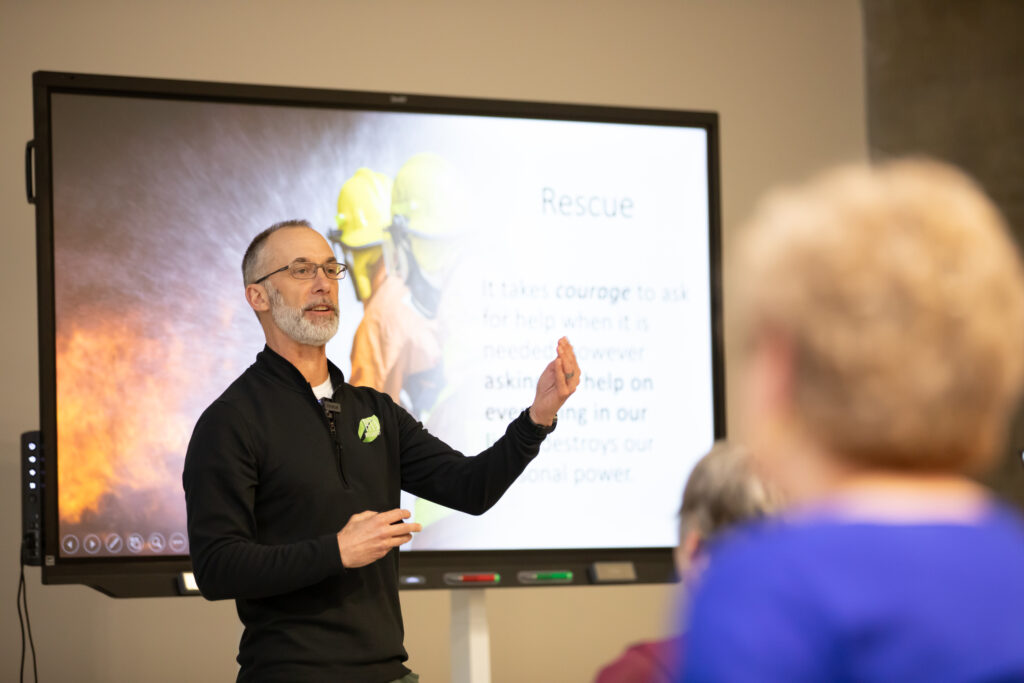
Most entrepreneurs already know what helps.
Get better sleep.
Move more.
Eat well.
Manage stress.
And yet, the same pattern keeps showing up.
Good people.
Putting in effort.
Still feeling overwhelmed.
Still making decisions they later question.
Still reacting instead of responding.
If knowledge alone solved stress, most organizations would already be operating at a very high level.
But they’re not.
Because the real issue is rarely a lack of knowledge.
It’s how people perform when pressure increases.
The Moment That Matters Most
Stress does not show up evenly.
It shows up at the worst times.
When the decision matters.
When time is tight.
When stakes are high.
When people are tired.
When there is no clear answer.
In those moments, something subtle but important happens.
Attention narrows.
Patience drops.
Communication shortens.
Decisions speed up.
This is not a character issue. It’s a human response.
Under pressure, the brain shifts toward efficiency, not accuracy. It prioritizes speed over reflection. That can be useful in some situations, but in business and leadership, it often creates unintended consequences.
Missed details.
Rushed decisions.
Strained communication.
Avoidable mistakes.
The cost is not always immediate, but it accumulates over time.Why Traditional Approaches Fall Short
Most stress management advice focuses on what people should do.
Breathe more.
Take breaks.
Set boundaries.
These are useful.
But they often fall short for one reason.
They are not practiced in the moments that matter most.
There is a gap between knowing and doing.
And that gap tends to widen under pressure.
In a calm environment, most people can apply good habits.
In a high-pressure environment, those habits often disappear.
This is where performance changes.
A Simple Reframe That Changes Everything
One shift can make a meaningful difference.
Instead of asking:
“How do I eliminate stress?”
A better question is:
“How do I perform when stress shows up?”
That shift moves the focus from avoidance to capability.
Because stress is not always avoidable.
Deadlines exist.
Uncertainty exists.
Responsibility exists.
What can improve is how we respond.
What High-Performing Individuals Do Differently
Across different industries, one pattern stands out.
High-performing individuals are not necessarily less stressed.
They are more prepared for it.
They tend to have:
- Greater awareness of how stress affects them
- Simple tools they can apply quickly
- Habits that support their baseline performance
- The ability to pause before reacting
These are not complex skills.
But they are practiced.
And that makes the difference.
The Role of Awareness
Awareness is often overlooked because it sounds simple.
But it is foundational.
You cannot adjust what you do not notice.
Many people do not recognize when their stress response is influencing their decisions.
They think:
“I’m just busy.”
“I’m just frustrated.”
“I’m just tired.”
But underneath that, their cognitive capacity has changed.
Awareness creates a small but important gap.
A moment to recognize:
“My response is being influenced right now.”
That moment is where better decisions begin.
Tools Are Only Useful If They Are Usable
Most people have heard of breathing techniques or quick resets.
The challenge is not access.
It is application.
In real environments, tools need to be:
- Simple
- Fast
- Repeatable
- Practical
If a tool takes too long or feels unrealistic, it will not be used when pressure increases.
That is why simple approaches tend to work best.
A short pause.
A controlled breath.
A shift in focus.
These are small actions.
But when applied consistently, they influence performance.
Why Habits Matter More Than Occasional Effort
Many people try to manage stress only when it becomes noticeable.
That approach is reactive.
A more effective approach is to build a stronger baseline.
Sleep.
Movement.
Nutrition.
Recovery.
Connection.
These are not new ideas.
But they directly influence:
- Energy
- Focus
- Emotional regulation
- Decision-making
When these areas are neglected, stress has a greater impact.
When they are supported, resilience improves.
This is not about perfection.
It is about consistency.
A Short Example
Years ago, during a long endurance ride, I experienced something that translates directly to business and leadership.
The conditions were difficult. Wind, fatigue, and distance were all factors.
Early in the ride, decisions were clear. Pacing made sense. Energy was managed well.
As fatigue increased, small decisions started to change.
Pacing became inconsistent.
Focus dropped.
Frustration increased.
Nothing about the situation had changed significantly.
But performance had.
The difference was not knowledge. It was capacity.
Once that became clear, the focus shifted.
Instead of pushing harder, the approach changed to managing energy, staying aware, and making smaller, more controlled decisions.
Performance stabilized.
The lesson was simple.
Under pressure, how you manage yourself matters more than what you know.
What This Means for Entrepreneurs
Entrepreneurs operate in environments where pressure is constant.
Decisions are frequent.
Time is limited.
Responsibility is high.
In those environments, small shifts in performance can have large effects.
A rushed decision can impact a client relationship.
A short response can affect a team member.
A lack of focus can delay important work.
These are not failures of knowledge.
They are moments of performance under pressure.
Improving those moments can improve outcomes.
A Practical Starting Point
There is no need to overhaul everything.
A more effective approach is to start with one area.
One habit.
One tool.
One moment of awareness.
For example:
- Notice when stress begins to rise
- Pause for a brief reset
- Focus on one clear next action
That is enough to begin.
Consistency matters more than intensity.
Why This Matters
Stress management is often framed as a personal issue.
Something to “deal with” individually.
In reality, it is a performance issue.
It influences:
- Decision quality
- Communication
- Leadership consistency
- Team dynamics
- Long-term outcomes
When individuals improve how they perform under pressure, the effects extend beyond the individual.
They influence the organization.
Final Thought
Stress is not always the problem.
But unmanaged stress can quietly shape performance in ways that are easy to overlook.
The goal is not to eliminate it.
The goal is to build the awareness, tools, and habits to respond to it better.
Because when performance improves under pressure, outcomes tend to improve with it.
If This Is Relevant to Your Team
If you are seeing the effects of pressure in decision-making, communication, or overall performance, it may be worth a closer look.
These are areas that can be improved with practical, structured approaches.
If helpful, I’m always open to a conversation around how this applies within your organization.
Rob Jetten
RTJ Wellness
Health & Performance Coaching
rob@rtjwellness.com