Kindness often gets framed as a personality trait.
Something you either have or you don’t.
In families, workplaces, schools, and organizations under pressure, it’s sometimes dismissed as nice but unrealistic, a luxury for calm days, not stressful ones.
But the science tells a very different story.
Kindness is not softness.
It’s a stress buffer, a regulation skill, and one of the most underutilized leadership tools available when people are stretched thin.
And in today’s environment, that matters more than ever.
Stress Changes How People Behave – Not Who They Are
When stress levels rise, the nervous system shifts into protection mode.
This isn’t a mindset issue.
It’s biology.
Under chronic pressure:
- People become more reactive
- Patience drops
- Communication shortens
- Empathy narrows
- Small issues escalate quickly
Neuroscience research shows that high stress reduces access to the prefrontal cortex, the part of the brain responsible for perspective taking, impulse control, and thoughtful decision making. In simple terms, stress makes it harder to act like the person you want to be.
This is why kindness often disappears first when workloads increase.
Not because people don’t care.
Because their nervous systems are overloaded.
Kindness as a Regulation Strategy
Here’s the critical reframe:
Kindness isn’t just something you give.
It’s something that regulates both the giver and the receiver.
Research consistently shows that acts of kindness:
- Lower cortisol (the stress hormone)
- Increase oxytocin ( a hormone linked to trust and connection)
- Reduce threat perception
- Improve emotional regulation
- Strengthen social bonds
In other words, kindness helps people feel safer.
And psychological safety isn’t a buzzword, it’s a performance multiplier.
Teams that feel safe:
- Communicate more clearly
- Recover faster from conflict
- Make better decisions under pressure
- Experience lower burnout and turnover
Kindness becomes a protective factor, not a courtesy.
Why This Matters for Leaders
Leadership isn’t tested on easy days.
It’s tested:
- When deadlines pile up
- When staff are tired
- When budgets are tight
- When emotions are high
- When mistakes happen
Under pressure, people look to leaders not just for answers, but for signals of safety.
A calm tone.
A moment of understanding.
A respectful response when frustration would be easier.
These aren’t small things.
They shape culture in real time.
Importantly, kindness does not mean:
- Lowering standards
- Avoiding accountability
- Ignoring performance issues
It means addressing challenges without activating unnecessary threat.
That distinction is everything.
Kindness Is Trainable – Not Just Intentional
One of the biggest myths is that kindness depends on mood or personality.
In reality, it’s a skill set:
- Awareness under stress
- Emotional regulation
- Language choices
- Pausing before reacting
- Responding instead of reflexively reacting
Like any skill, it improves with practice and structure.
Organizations that treat kindness as accidental get inconsistent results.
Organizations that treat it as intentional see measurable change.
This is where wellness, leadership, and performance intersect.
The Cost of Getting This Wrong
When kindness disappears under stress, the costs show up quietly but persistently:
- Rising tension
- Miscommunication
- Withdrawal
- Absenteeism
- Burnout
- “People problems” that are actually nervous system problems
Many organizations try to fix these issues with surface-level solutions:
- Policies
- Emails
- One-off morale boosts
But culture doesn’t change through reminders.
It changes through regulated behavior under pressure.
A Question Worth Sitting With
What would shift in your workplace, school, or organization if kindness wasn’t treated as a personality trait but as a leadership skill?
What if it was trained, practiced, and supported, especially when stress is high?
That question sits at the heart of sustainable performance, psychological safety, and long-term wellbeing.
Where RTJ Wellness Fits
At RTJ Wellness, we work with organizations to:
- Understand how stress impacts behavior
- Build practical regulation skills
- Strengthen leadership under pressure
- Create cultures where people can perform without burning out
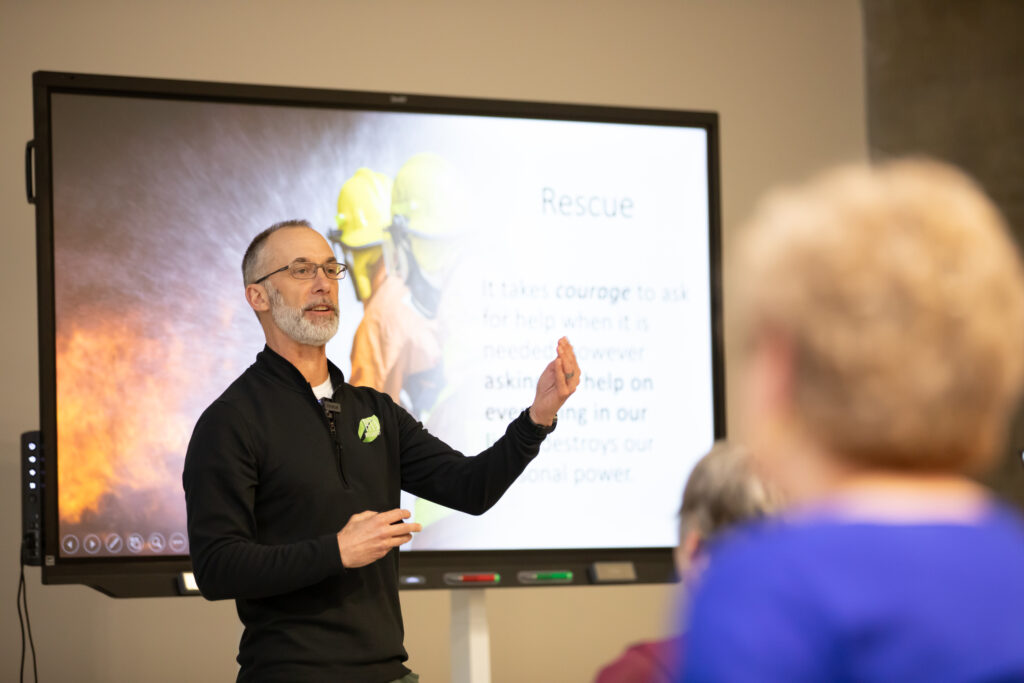
Our workshops and presentations don’t ask people to be nicer.
They give them the tools to stay human when things get hard.
Because kindness isn’t the opposite of strength.
It’s often the clearest sign of it.
If this perspective resonates, it may be time to move beyond awareness and into application.
That’s where real change begins.